
365 Technologies: Blog
Why Hackers Target Small Businesses (and How to Stop Them)
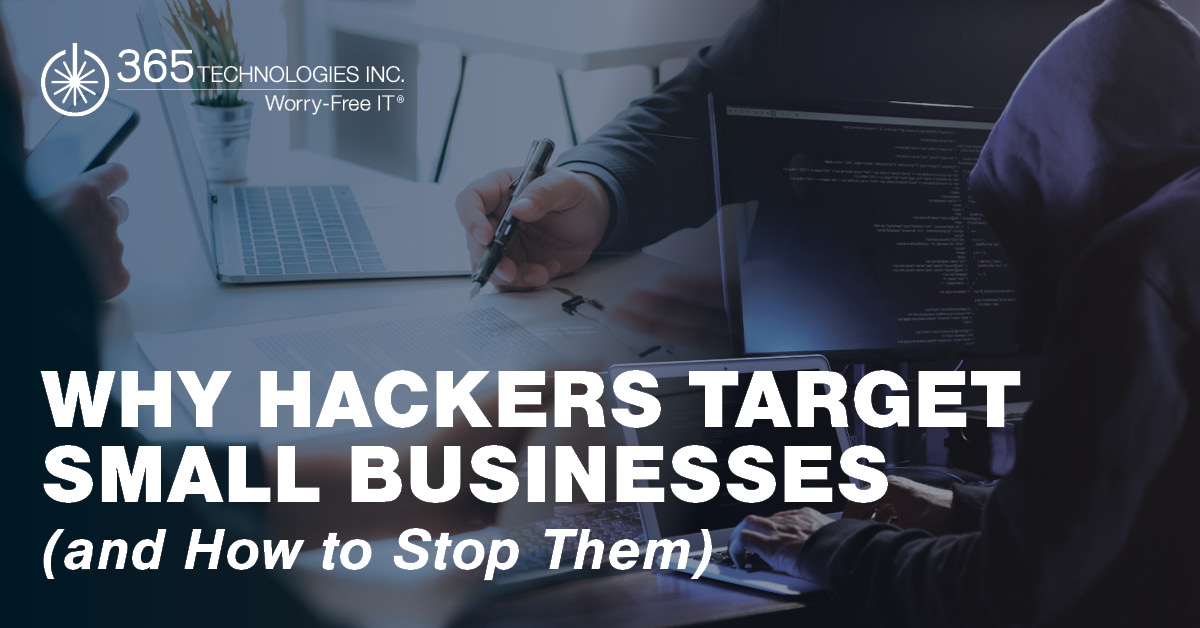
When you think about hackers, maybe you picture a shadowy figure breaking into the system of a large corporation or government… but the truth is, small businesses are actually a favourite target. Why? Because most hackers are chasing easy wins, and for too many small businesses, weak IT protections make them exactly that.
Here’s the good news though: once you know why hackers love small business, you can start taking the right steps to make sure yours isn’t on their list. Let’s break it down!
Small Business = Big Opportunities for Hackers
At the end of the day, hackers are opportunists. They know that small businesses don’t always have the same resources as large enterprises, with a separate budget item to invest in cybersecurity, especially when they’re just starting to grow. That often means outdated systems, weaker defences and overworked staff who haven’t had much security training.
Hackers know that a single stolen password or infected attachment can open the door to ransomware attacks, phishing scams and data breaches and for a hacker, that’s not just a quick payday, it’s a repeatable business model.
The “We’re Too Small to Be a Target” Myth
In today’s cyber threat landscape, one of the most dangerous beliefs a small business owner can have is that “Hackers won’t bother us, we’re too small.”
The reality is that size does not protect you. In fact, small businesses are often attacked more often than larger companies because cybercriminals know that they’ll face less resistance. According to industry reports, more than 60% of small businesses believe their business is too small to be targeted, and nearly half of all cyberattacks now target small and mid-sized businesses!
Hackers aren’t usually looking for a big win. They’re looking for a steady stream of small, easy wins and for them, that’s exactly what under-protected businesses provide.
The Real Cost of a Cyberattack
Cyberattacks rarely end when the breach is discovered. The impact will ripple across your business, draining time, money and trust long after the incident. Even if you get systems back online quickly, the hidden costs can pile up in ways most small businesses underestimate.
Some damaging consequences you could face include:
- Downtime: For hours or days (or even longer) when your systems are unusable, your operations grind to a halt.
- Reputation damage: Customers can lose confidence in your business if their personal or financial data is exposed during an attack
- Insurance challenges: More and more insurers now require proof of security training, monitoring and disaster relief plans before covering claims
- Ransomware risks: Even if you pay a ransom, there’s no guarantee that your stolen data won’t still be leaked or sold online
- Recovery costs: Investigations, legal fees and rebuilding your systems can add up quickly
The true cost of a cyberattack isn’t just financial: it’s a test of resilience that some never fully recover from.
How Hackers Sneak In
What we see on TV and in movies is simply not reality. Most cyberattacks don’t start with a lone hacker in a dark room with sophisticated code. They actually start with human error. A distracted employee clicks on a malicious link in an email. The same, weak password gets reused across multiple accounts and multi-factor authentication (MFA) isn’t in use. An old system doesn’t get updated with the latest security patch.
These are the things hackers look for. That’s why they use tactics like:
- Phishing emails disguised as invoices, shipping notices, or even urgent messages from your bank
- Trick staff into sharing credentials or access (known as social engineering)
- Hidden malware in downloads that come from seemingly legitimate websites
In 2025, it’s not a question if hackers will try: it’s when.
So, How Do You Stop Them?
The key to protecting your business isn’t investing in expensive, flashy technology. It’s about building layers of defence to give your business the best protection.
- Train your team
Your employees are your first line of defence. Regular security awareness training helps them recognize phishing attempts, suspicious attachments and other red flags before they become disasters. - Keep systems updated
Software updates aren’t just cosmetic, they’re there to patch known security holes. Running outdated software is like leaving the front door of your home unlocked. - Use multi-factor authentication
MFA is one of the simplest, most cost-effective ways to block hackers. Even if a password manages to get stolen, MFA gives you another layer of protection. - Back up your data
Regular secure backups means you can recover quickly if an attack strikes. Without them, you’re at the mercy of attackers. - Get 24/7 cybersecurity monitoring
Cybercriminals don’t work 9-to-5. Having round-the-clock monitoring means threats are caught (and stopped) before they can spread. - Work with a Managed IT services provider
Let’s be honest, most small businesses just don’t have the time, expertise or staff to keep up with evolving threats. Outsourcing IT gives you access to experts who live and breathe security, so you can focus on running your business.
Don’t Wait Until It’s Too Late
Here’s the tough truth: most small businesses don’t think about cybersecurity until after they’ve already been hit. By that time, the damage is already done.
Being proactive is the smartest move you can make for your business. Hackers thrive on companies that leave those doors open but by investing in training, monitoring and the right technology, you make your business a much more difficult target.
At 365 Technologies, we specialize in delivering Worry-Free IT® to small and medium sized businesses like yours. That means 24/7 help desk support, 24/7 proactive monitoring and cybersecurity strategies designed for companies just like yours. Hackers may love small businesses, but with the right defences, yours won’t make their list.
The Final Word
Hackers aren’t going away and cyberattacks incidents will continue to rise. You don’t need the budget of a large corporation to protect yourself, but you do need to invest in protection because the alternative could be a lot more expensive. You need the right approach, and the right partner.
Want to find out if your business is at risk? Let’s talk.
Book a free 15 minute call to find out how we can help

Recent Posts
How can we help?
Whether you need immediate help with an IT issue or want to discuss your long-term IT strategy, our team is here to help.
Call us at (204) 336-6518 or complete the form below and we'll help in any way we can.